
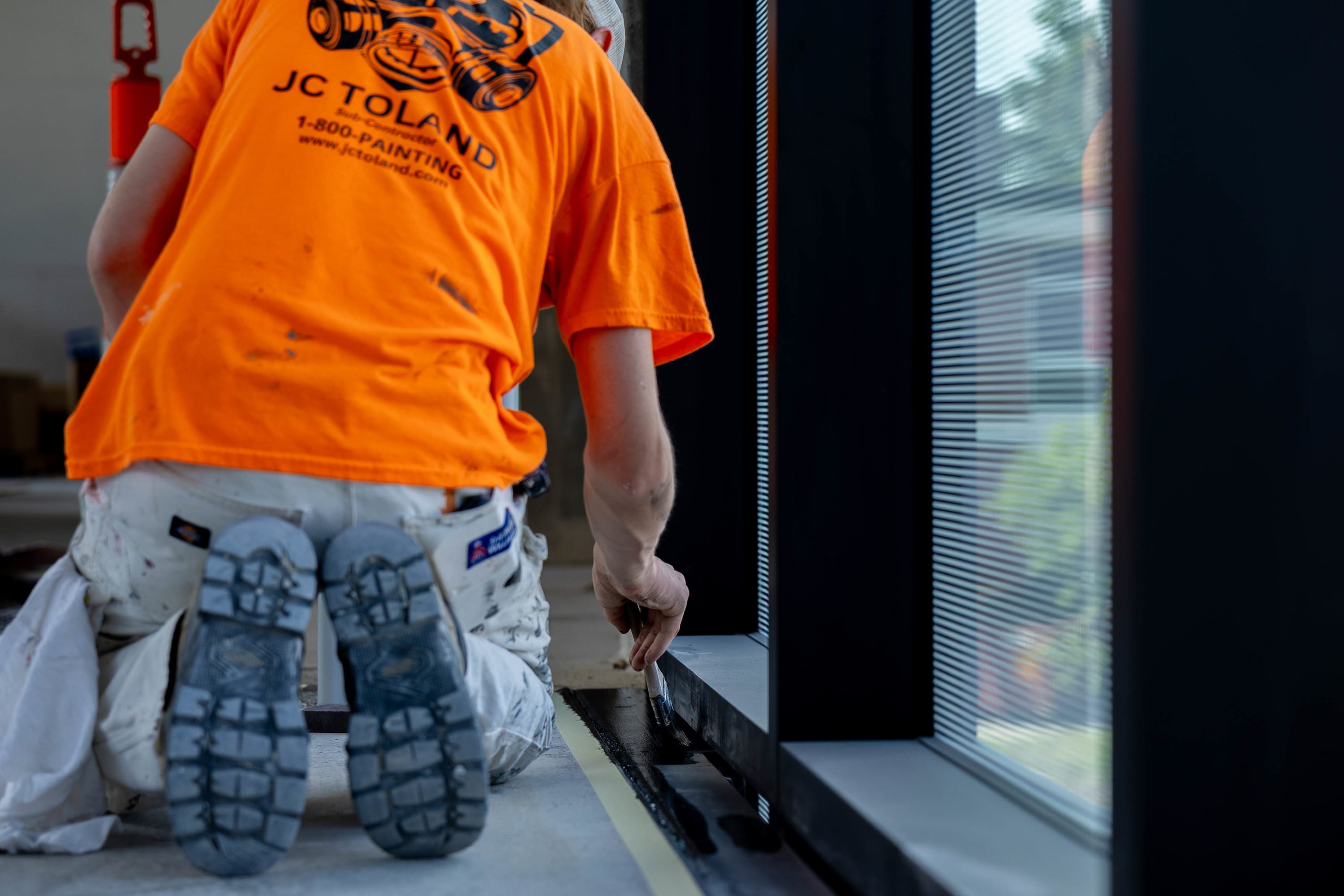
When it comes to repainting an occupied commercial building, there’s a lot more to consider than choosing paint colors and scheduling a crew. For schools, office buildings, healthcare facilities, and other active commercial spaces, daily operations don’t stop just because there’s work to be done.
Employees still need to get to their offices, students need to move between classrooms, and businesses need to continue serving their customers. At the same time, contractors need the space, equipment, and time to complete their work efficiently, all while maintaining a safe environment for trade partners and other individuals around them.
Finding a balance between the two takes careful planning, communication, and collaboration among everyone involved.
We understand that a successful commercial repaint isn’t just about the finished product. It’s also about how we get there.
One of the most important parts of any commercial repaint happens before a roller ever even touches a wall.
Every facility operates differently, and understanding those operations is an important first step in developing a realistic and effective project schedule. What works for an office building likely won’t work for a school, manufacturing facility, or healthcare environment.
Before work begins, there are several factors that need to be considered:
Addressing these questions early helps establish expectations and allows our team to develop an approach that works within the facility’s operational needs.
Of course, even the best plans can change. That’s why flexibility and ongoing communication are just as important as the initial preparation.
On many commercial projects, painting is just one piece of a much larger scope of work.
Drywall contractors, electricians, HVAC technicians, flooring installers, and other trades may all need access to the same spaces at different stages of construction or renovation. Without proper coordination, overlapping schedules can create unnecessary delays, rework, or disruptions.
That’s where a strong working relationship with the General Contractor becomes especially important.
Our responsibility is to communicate our needs, understand how our work fits into the overall schedule, and coordinate with other contractors to keep things moving. For example, painting may need to wait until drywall finishing is complete, overhead mechanical work has been addressed, or certain fixtures have been installed. In other situations, our crews may need to complete specific areas ahead of another trade to avoid scheduling conflicts.
The goal isn’t simply to finish our portion of the project and move on to the next. It’s to complete our work in a way that supports the progress of the entire project.
That requires accountability, adaptability, and a willingness to work together when circumstances change.
One of the biggest challenges of working in an occupied commercial facility is managing the areas that people rely on every day.
Consider a school, for example. Hallways, classrooms, entrances, and common areas are essential to the daily movement of students and staff. Closing off an entire corridor during the school day isn’t realistic.
The same can be said for an office building, where employees, visitors, and maintenance personnel need continued access to their workspaces.
Depending on the facility and project requirements, there are several ways to approach these situations.
Not every approach will work for every facility. The key is understanding the environment and finding solutions that account for the people who use the space throughout the project.
A well-managed project depends on more than a schedule. It depends on the people responsible for carrying it out.
For us, building strong relationships with General Contractors and clients starts with understanding their expectations and following through on our commitments.
That means keeping everyone informed, providing updates when circumstances change, addressing concerns as they arise, and being mindful of the facility’s daily operations.
It’s also about recognizing that every party involved has a responsibility.
The General Contractor is working to keep the overall project on schedule. The facility manager or building owner is focused on maintaining operations and minimizing disruptions. Our crews are responsible for completing their work safely, efficiently, and to the required quality standards.
While those responsibilities may look different, everyone is working toward the same goal.
We believe trust is built through the everyday interactions that happen throughout a project. Showing up when expected, identifying potential issues before they become larger problems, respecting occupied spaces, and doing what we say we’re going to do all contribute to a better working relationship.
And we believe those relationships don’t end when the project is finished.
A fresh coat of paint can make a significant difference in the appearance, maintenance, and longevity of a commercial facility. But the process of getting there matters, too.
For occupied buildings, success means balancing the demands of construction with the everyday activities happening around it.
At JC Toland Painting, we recognize that we’re often working in environments where business needs to continue as usual. By taking the time to understand each facility’s unique challenges and working closely with those involved, we aim to deliver quality work while being a dependable partner from start to finish.
Planning a commercial repaint or facility improvement project? Our team would be happy to discuss your scope of work, scheduling considerations, and how we can help you plan for a successful project.
Media Contact : Camber Ostwinkle
Related Links : www.jctoland.com
Source : https://www.jctoland.com/blog/commercial-repaint-planning/